
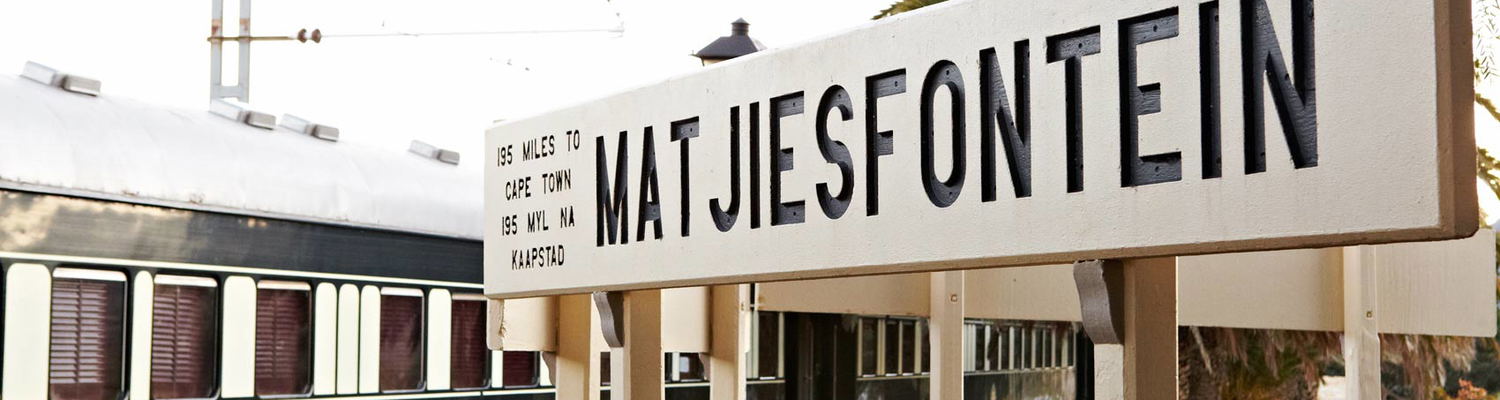
Matjiesfontein History
Matjiesfontein was founded in 1884 by the legendary and energetic Scottish railway man, James Douglas Logan. The village established itself as a fashionable Victorian health spa, and is now well known for its splendid historical buildings and a peace and timelessness that is rare in the modern-day.
Matjiesfontein is a feast for the imagination, between these walls lie a colourful history that includes international cricketers, Olive Schreiner’s residency, fortification during The South African War (formerly known as The Anglo-Boer War) as headquarters of the Cape Command, refuge for Jamieson Raid reformers, and the venue of controversial war crimes hearings.
James Logan built the double-storey, turreted Milner Hotel in 1899, during the early stages of The South African War. The hotel was used as a military hospital during the conflict with British forces with the central turret serving as lookout and machine gun post. Some 10,000 troops were camped around the village during this time. James Logan, founder of Matjiesfontein, died in 1920 and is buried in a little cemetery 10 kilometres from Matjiesfontein (on the N1 towards Touws River). His tomb is located next to the grave of George Lohmann, famous English cricketer who spent the last years of his life in the superb, dry climate of the Karoo.
In 1968, David Rawdon, hotelier par excellence whose claim to fame includes establishing Rawdons Hotel at Nottingham Road, the well-known Lanzerac set amongst the Stellenbosch vineyards, the Marine Hotel in Hermanus, and The Drostdy in Graaff-Reinet, purchased Matjiesfontein Village. After performing extensive renovations and utilising the wealth of antiques gathered during his world travels, David reopened the hotel in 1970, renaming it The Lord Milner Hotel.
The extravagant Royal Lounge portrays the life of James Logan and other famous Victorian personalities who occupied or visited the village over the last century. The grandeur of Matjiesfontein stretches back to a heyday when the village was a fashionable health spa that attracted visitors from all over the world, including Lord Randolph Churchill (father of Winston), Cecil John Rhodes, Rudyard Kipling and of course, Olive Schreiner. In testament, the entire village of Matjiesfontein was preserved as a National Heritage Site in 1975. David who spent a lifetime shaping some of South Africa’s foremost country hotels, is now too at rest in this place he so loved.
After David’s death in 2010, the Rawdon Family as custodians of Matjiesfontein, continue his legacy. Jon and Tom Rawdon, with the oversight and guidance of Bengy (David’s brother) have overseen renovation and expansion, including recent refurbishment of Tweedside Lodge - Logan’s original homestead - as guest accommodation. The focus is on providing a unique and genuine hospitality experience, while securing the timeless traditions of Matjiesfontein for future generations to enjoy.
Share This Page